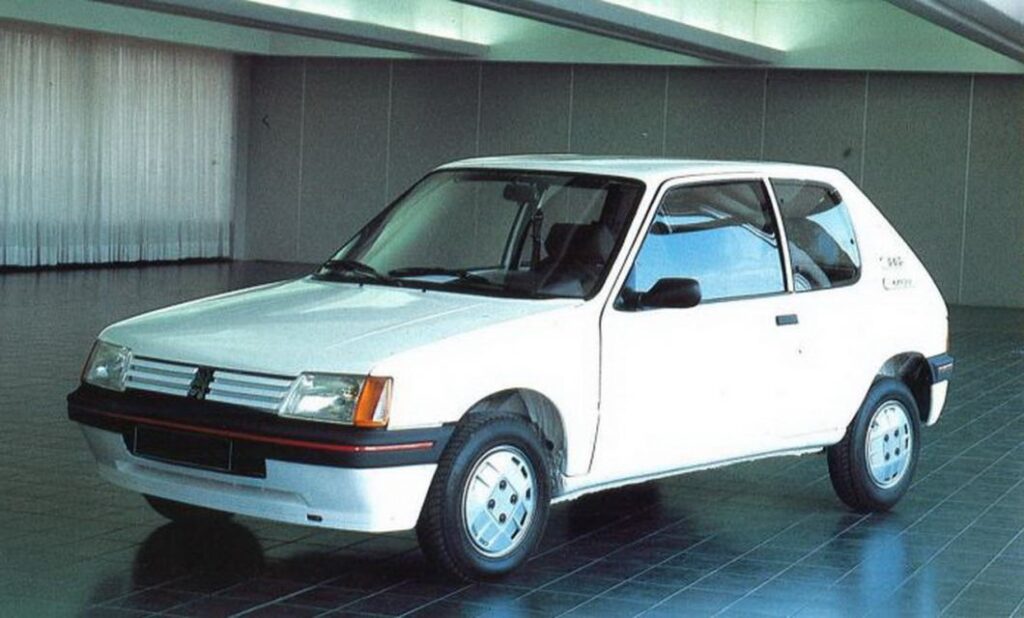
Electric driving is not a new development for Peugeot. In 1941, the manufacturer introduced the VLV, followed by the 106 in 1993. However, the research program for these models began ten years earlier with the completely unknown Peugeot 205 Electrique, which completely escaped the attention of the general public.
The first electric vehicles from the Sochaux company date back to 1902. At the time, Peugeot was working on the electrification of commercial vehicles. A few examples were built, but the project was abandoned until 1941. In response to fuel shortages, manufacturers sought alternatives, including the familiar gas generator. Peugeot explored the electric route with the Voiture Légère de Ville (VLV), 377 of which were sold from 1941 to 1945. In the 1970s, new research was initiated with Alsthom and EDF. This resulted in several prototypes of the electric 104 (four coupes and three vans), followed by the J5 and J9 electric commercial vehicles.
Peugeot 205: The first step towards modern electric driving
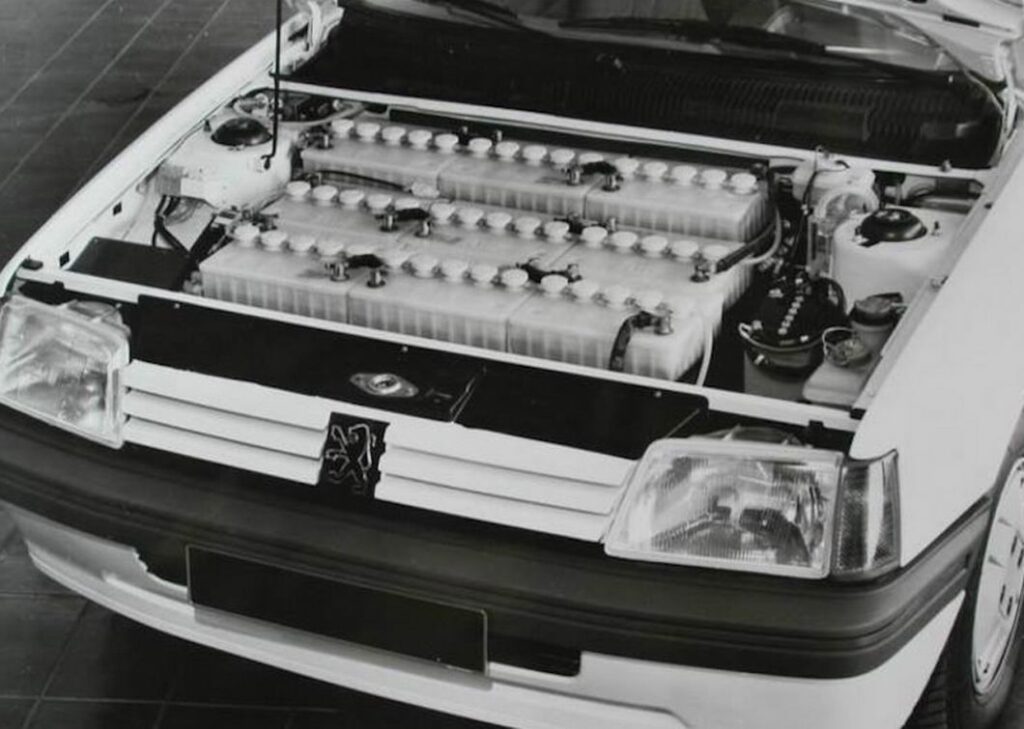
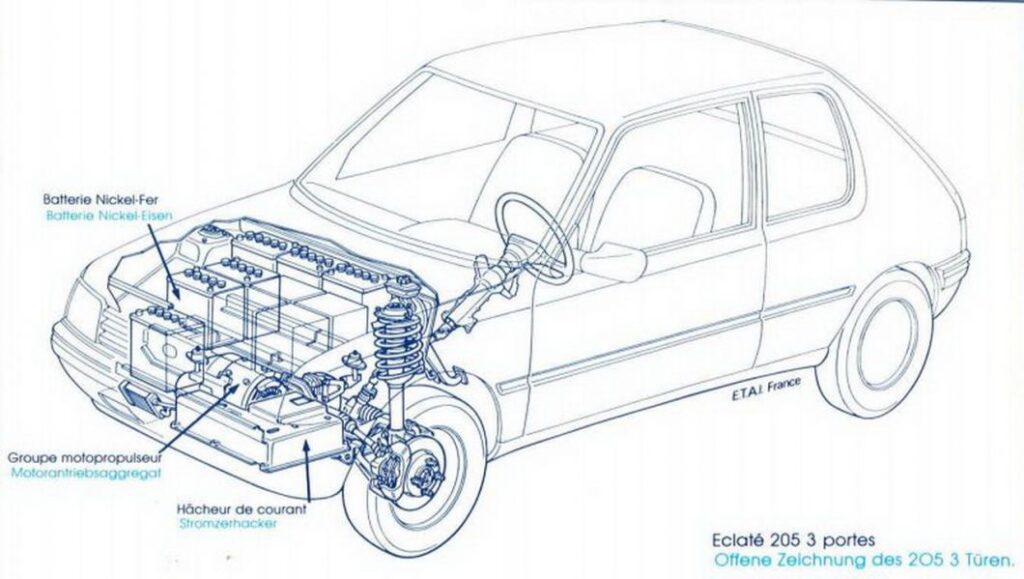
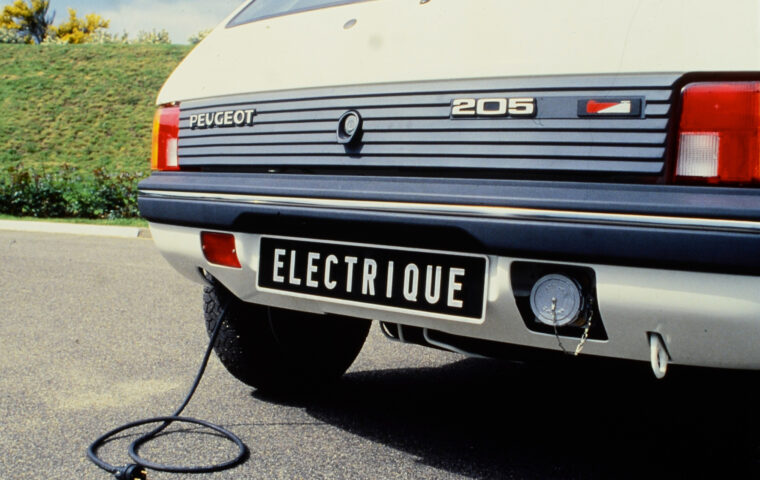
In 1983, Peugeot’s “sacred number” served as the basis for a new program with Saft, a battery specialist now part of the Airbus battery program with PSA. In barely a year, they presented a prototype of the Peugeot 205 Electrique. The nickel-iron battery, weighing 300 kg, was installed in the engine compartment (12 6V blocks with a nominal capacity of 230A). The advantage of this chemistry was a doubled lifespan (200,000 km). Charging time was 10 hours at a 16A outlet.
For the 1980s, the range was far from ridiculous: 140 km in urban areas, 200 km at 40 km/h, and 140 km at 70 km/h. This is far below the 340 km of the Peugeot e-208. The same applies to performance. The 205 is equipped with an 8 kW (11 hp) Leroy-Somer engine with a peak output of 17.5 kW (23.8 kW). This allows for a top speed of 100 km/h and 0-50 km/h acceleration in 11.6 seconds. For comparison, the engine in the e-208 (produced under license from Continental) produces 100 kW (136 hp), a top speed of 150 km/h (sport mode), and acceleration from 0 to 100 km/h in 8.1 seconds.
Off the radar
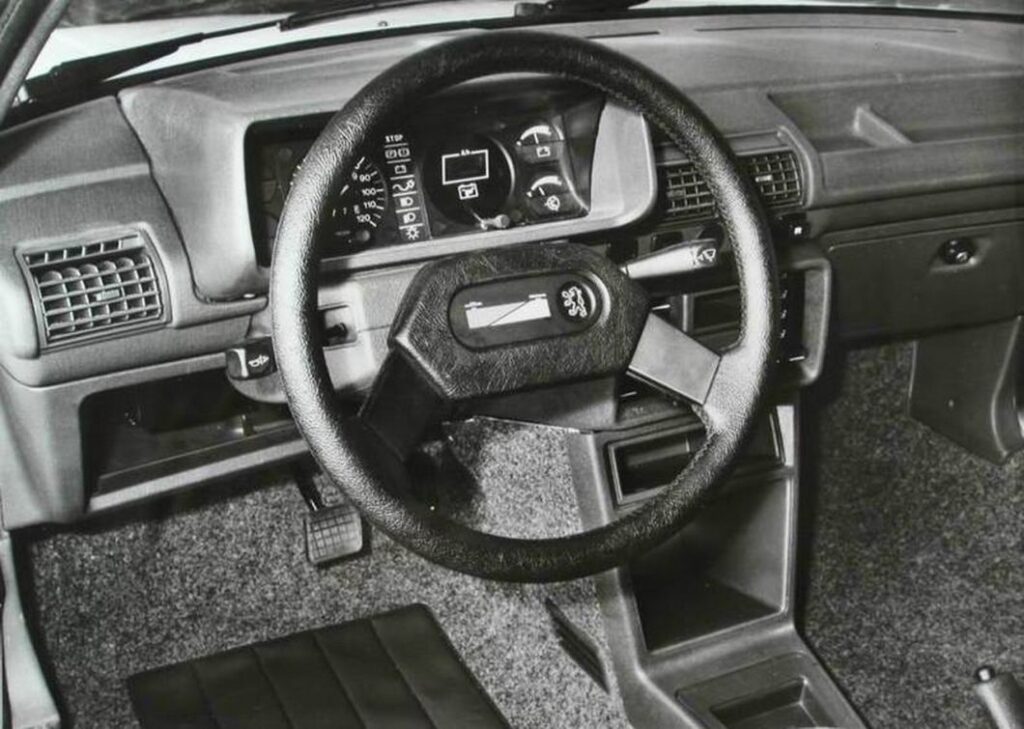
The Peugeot 205 Electrique already had modern electric driving features. Reading the technical brochure from that time, we discover that it was already equipped with an energy recovery system during deceleration and braking. The electric 205 ultimately didn’t make it to the showrooms. Approximately twenty units (some of which were exported) were produced. The electric models can be recognized by the charging access hatch located under the rear bumper. The absence of an exhaust pipe also betrayed their true electric identity. The 205 served as the basis for the development of the 106 Electric, produced by coachbuilder Heuliez and sold from 1993 to 2003 in 3,542 units. It had a range of 80 km. Nowadays, the manufacturer has lost track of the sold models. Do you know where an electric model can be found? Feel free to email it to the editors of this magazine.