In the 1960s, Amsterdam visibly changed as car ownership grew rapidly. After the post war reconstruction, prosperity increased and more and more families were able to afford a car of their own. Brands such as Peugeot, Volkswagen and Opel became familiar sights on the streets. The car symbolised freedom, modernity and progress, but it did not always fit naturally into the narrow streets of the old city.
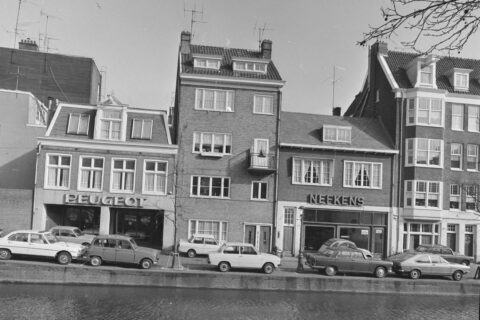
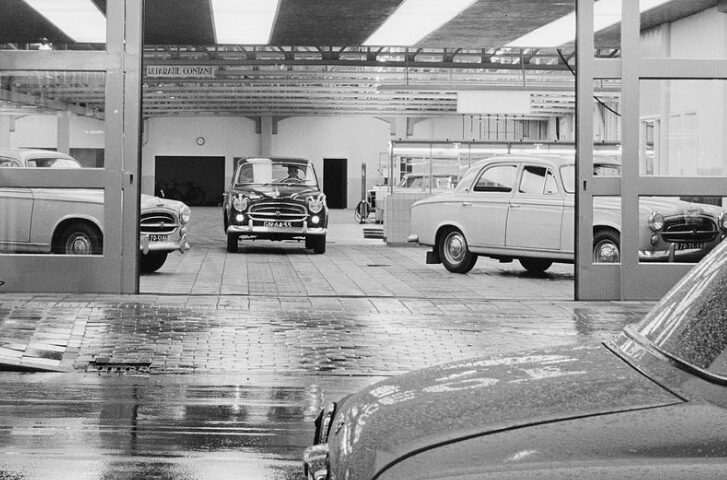
Car garages played an important role in this new culture of mobility. They were not only places for maintenance and repairs, but also meeting points where technology and craftsmanship came together. Garage Nefkens in Amsterdam is a good example of this. In the image, several Peugeot 403 models can be seen in the workshop in the early 1960s. This car, known for its reliability and comfort, was popular with both families and business drivers.
The presence of such garages shows how the city adapted to the growing volume of car traffic. At the same time, this period saw the first discussions about parking pressure, road safety and the liveability of the city centre, themes that remain relevant in Amsterdam to this day.