
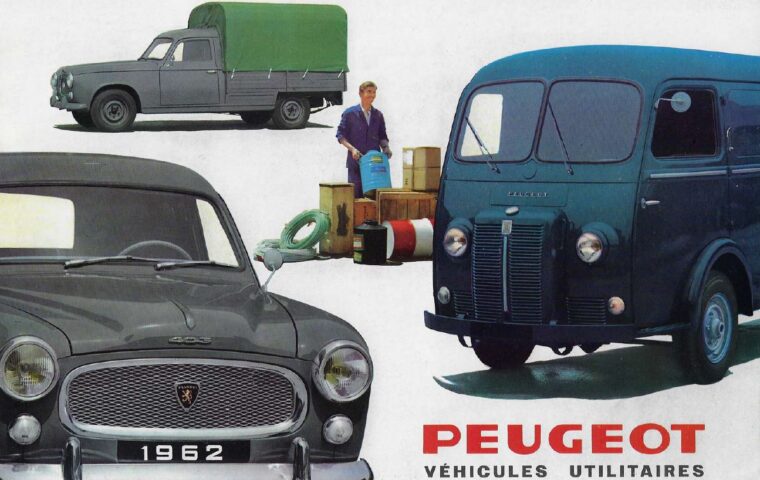
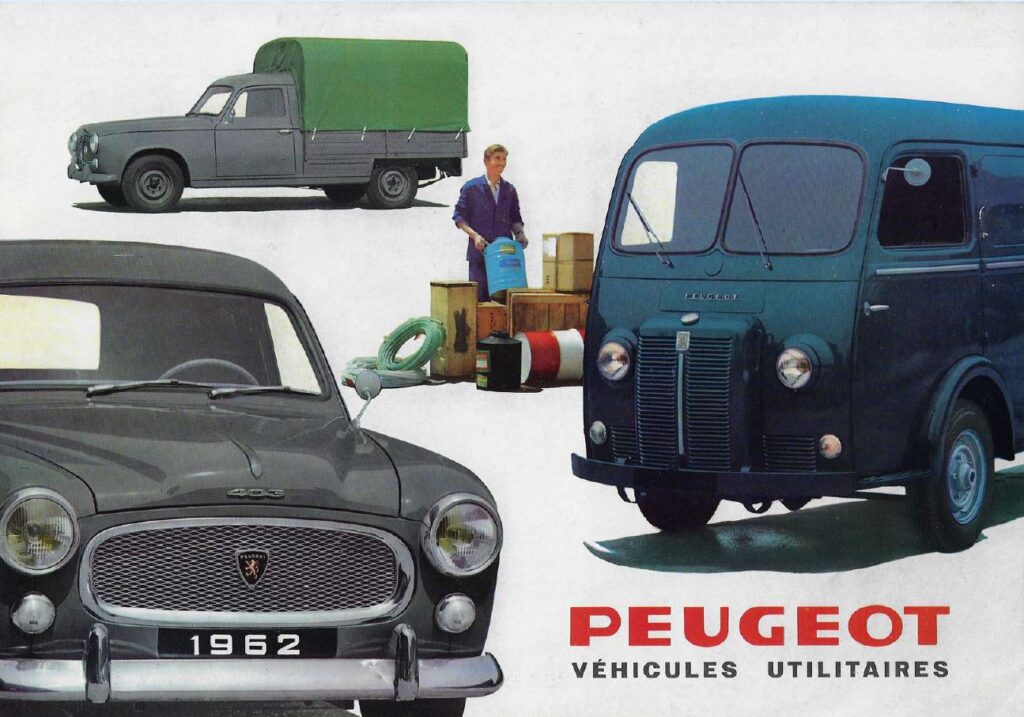
Peugeot commercial vehicles through Swiss villages and passes. Peugeot’s 1962 Swiss commercial vehicle brochure exudes calm efficiency: functional illustrations, clear tables, and photos of cargo being lifted, pushed, and neatly lashed down. At the heart of the range are three pillars: the 403 in its work variants (Commercial/estate, van, and canvas platform), the 403 as a modern pick-up and service estate, and the compact, front-wheel drive D4 van with its straight load area and low loading sill. The text emphasizes reliability in mountainous terrain, cool engine temperatures on passes, and the availability of diesel options for low consumption—a nod to the then-recent Indenor diesels. Typical for Switzerland: some brochures have multilingual captions (D/F/I) and photos full of Alpine context, a butcher driving through a village street, a carpenter on a mountain road, snow chains in the margin.
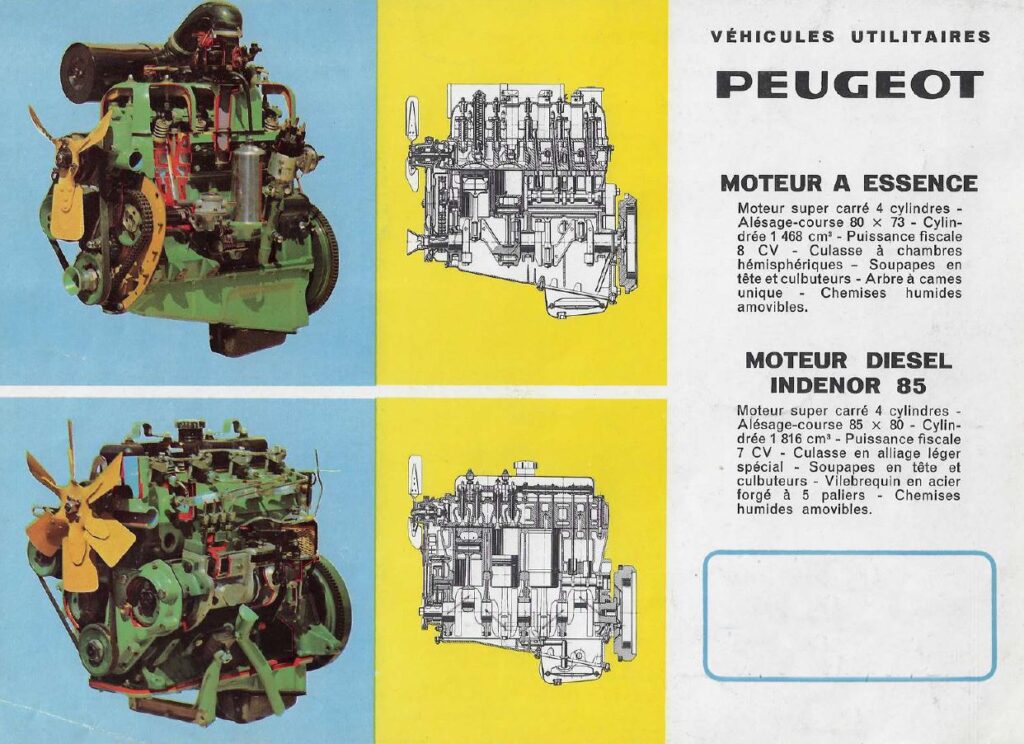
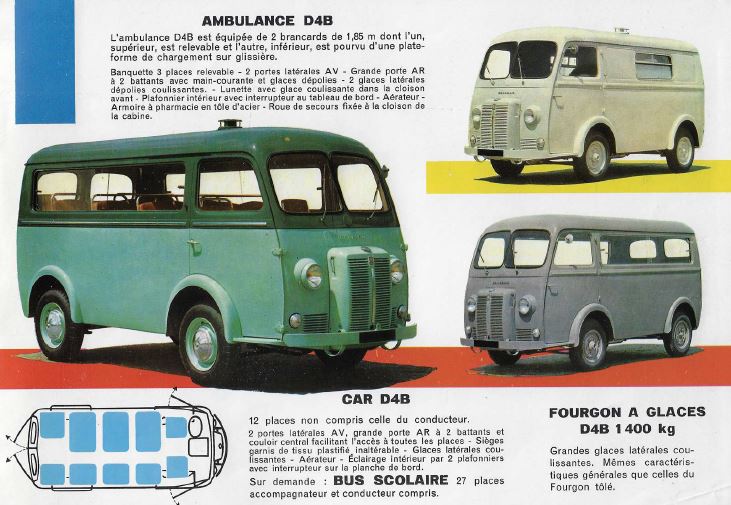
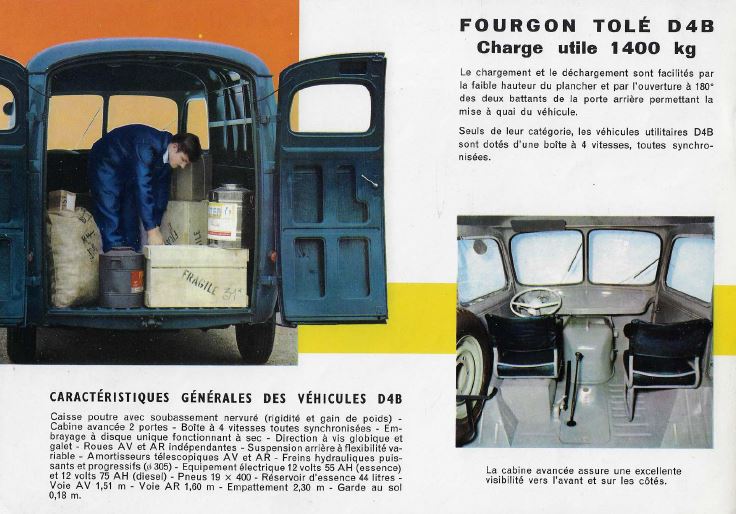
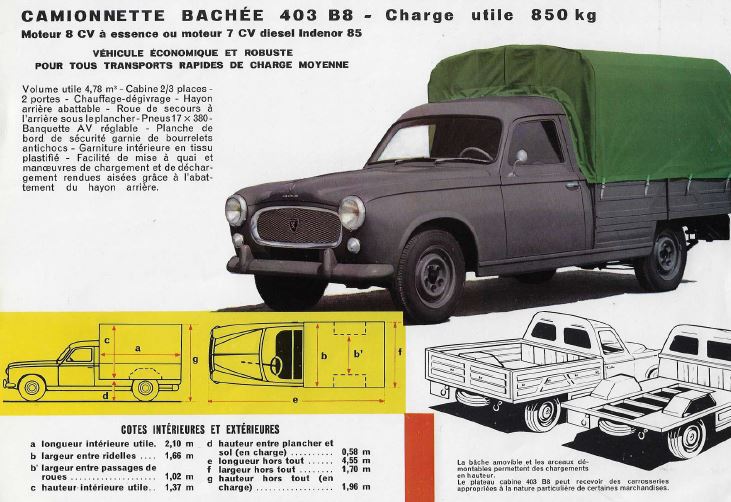
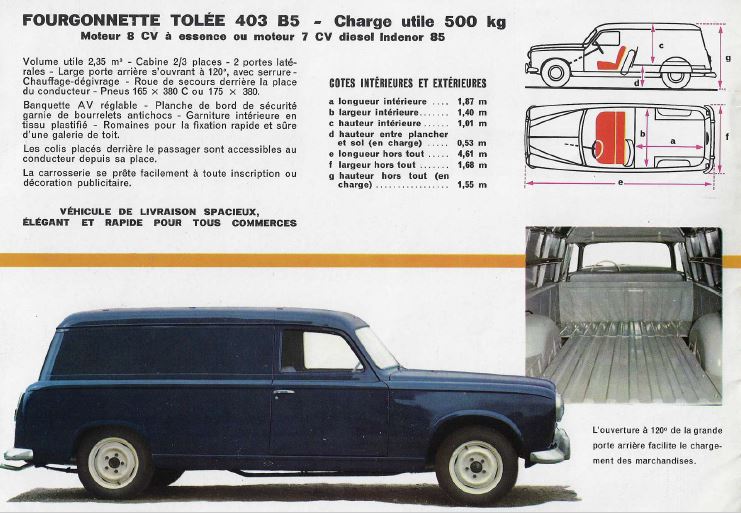
The 403-Commerciale is presented in the brochure as a “family worker”: all-round windows, a flat floor, and a robust interior. On the platform versions, line drawings show how the trellis and canopy can be removed modularly. Peugeot positions the 403 as the modern calling card: sleek body lines, a longer wheelbase for stability, and a cabin with greater seating comfort, an advantage for sales representatives who drive long distances every day. The D4, with its short nose and high doors, features detailed drawings of racks, double opening rear doors, and a side door for tight urban logistics. The same motif recurs everywhere: small external dimensions, large usable volume, and maintenance that can handle the village garage.
Visual facts from 1961–1963 make the brochure time-bound. You still often see two-colour printing (black plus one supporting colour, often blue or red) and those didactic “exploded views” in which crankshafts and differentials float next to the chassis. Safety creeps in: photos with adjustable mirrors, windscreen washers and, increasingly, seat belt preparation; Swiss captions feature terms such as “Bergabfahrten” (mountain driving) and advice on brake use. In these years, the D4B makes a name for itself with economical diesels for heavy routes, while the 403 remains popular as a tough delivery van with bakers and postal services. Street scenes betray the times: enamel Peugeot signs at village garages, petrol pumps with glass cylinders, wooden crates and jute sacks neatly stacked in box wagons. The photos suggest winter service chains on, nose in the wind and summer transport of cheese, wood and flowers. The brochure thus documents not only a model series, but also a work culture: solidity, thriftiness and mountain tranquility, packaged in clear French/Swiss pragmatism. Grüezi mitenand!


