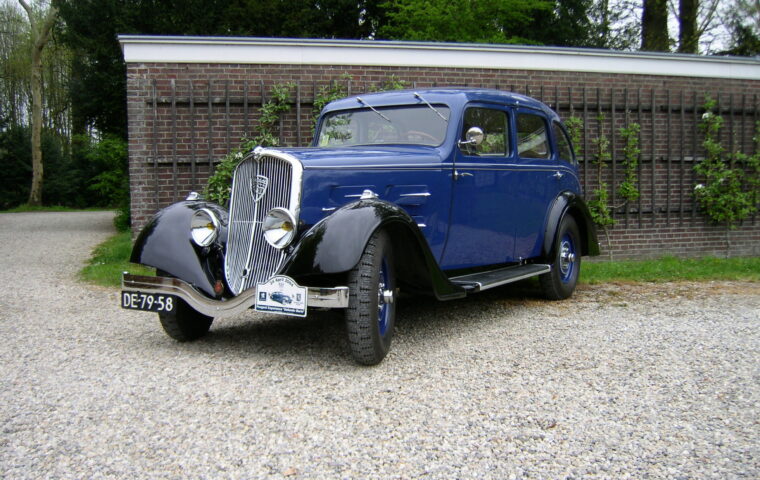
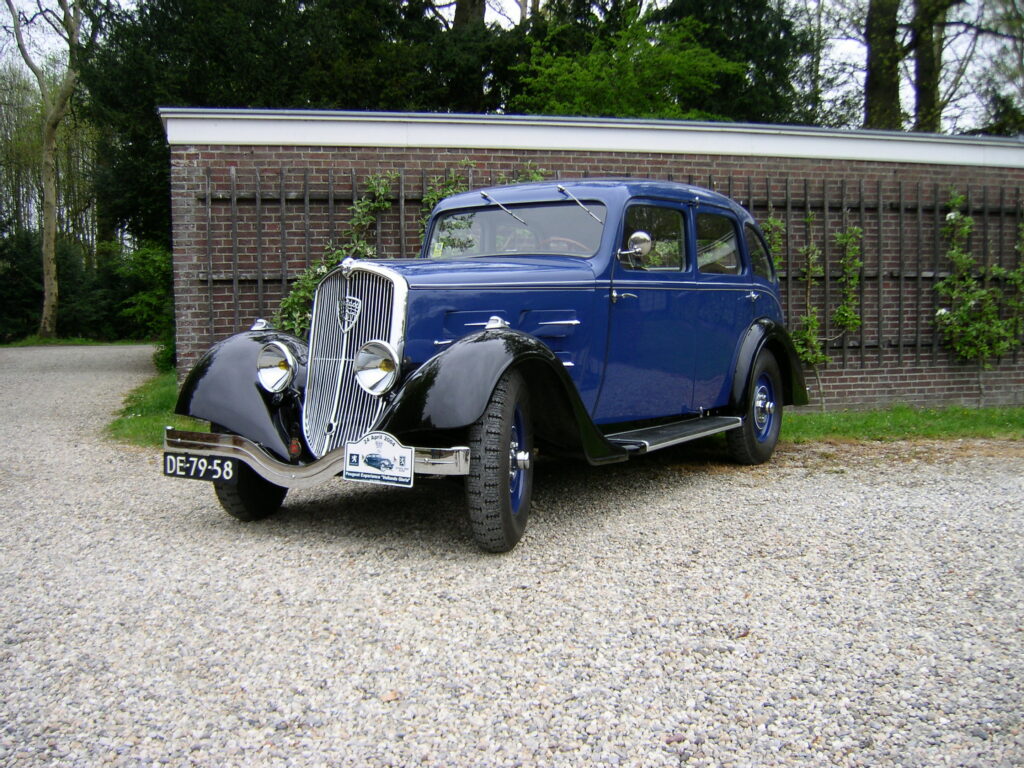
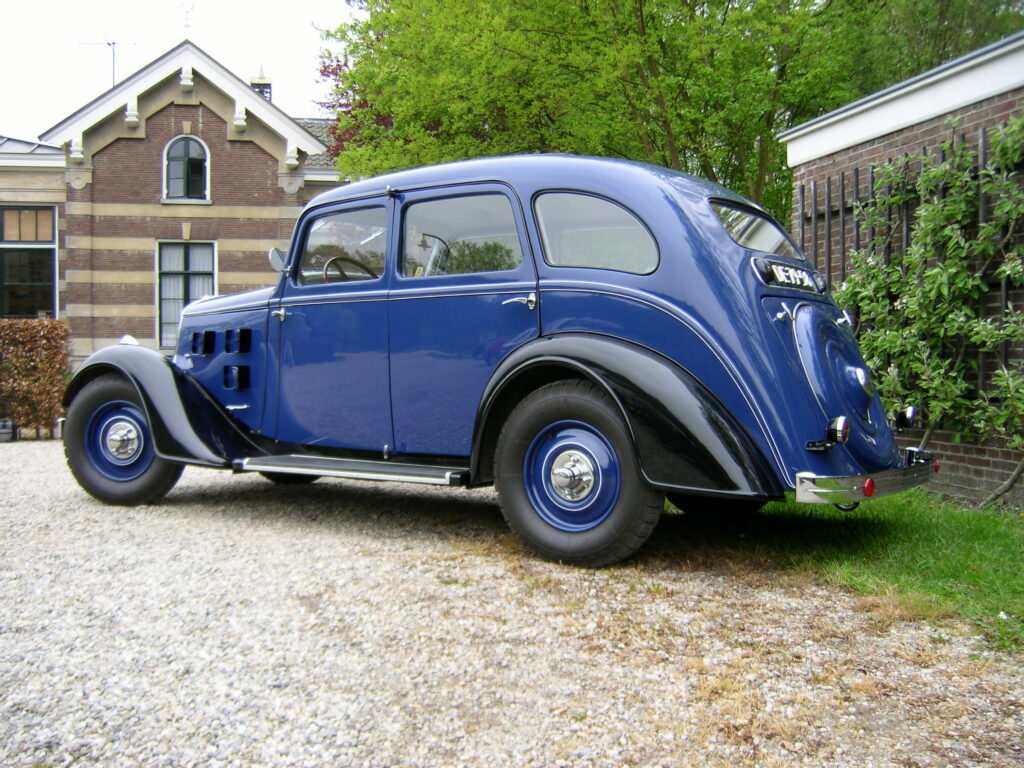
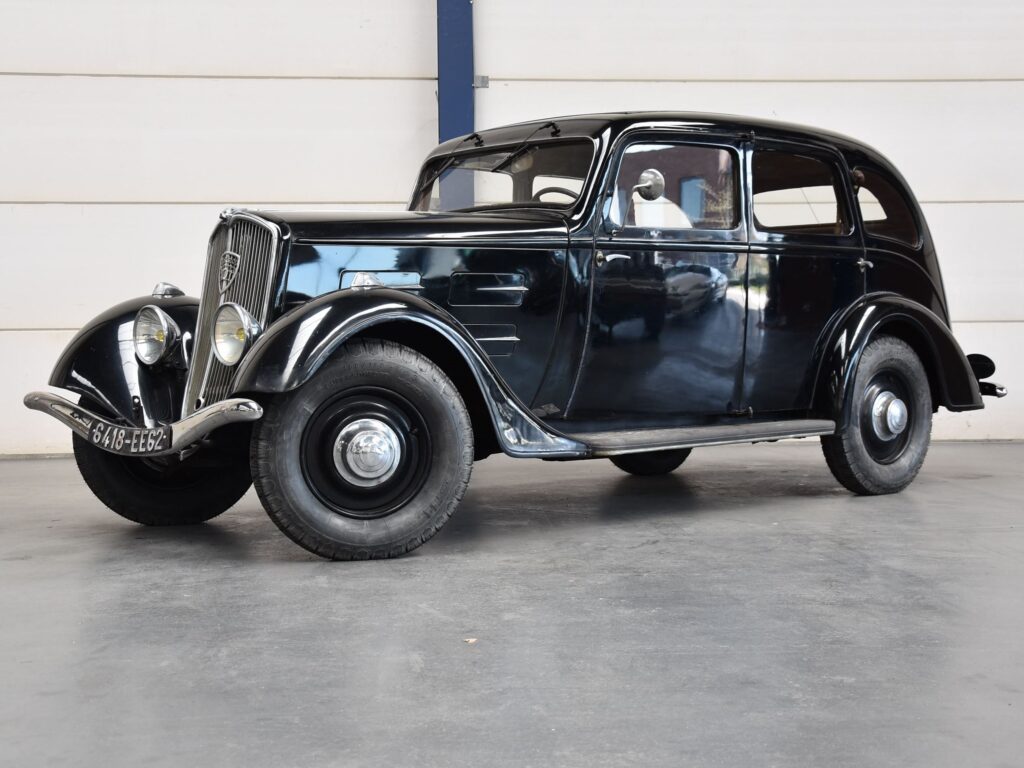
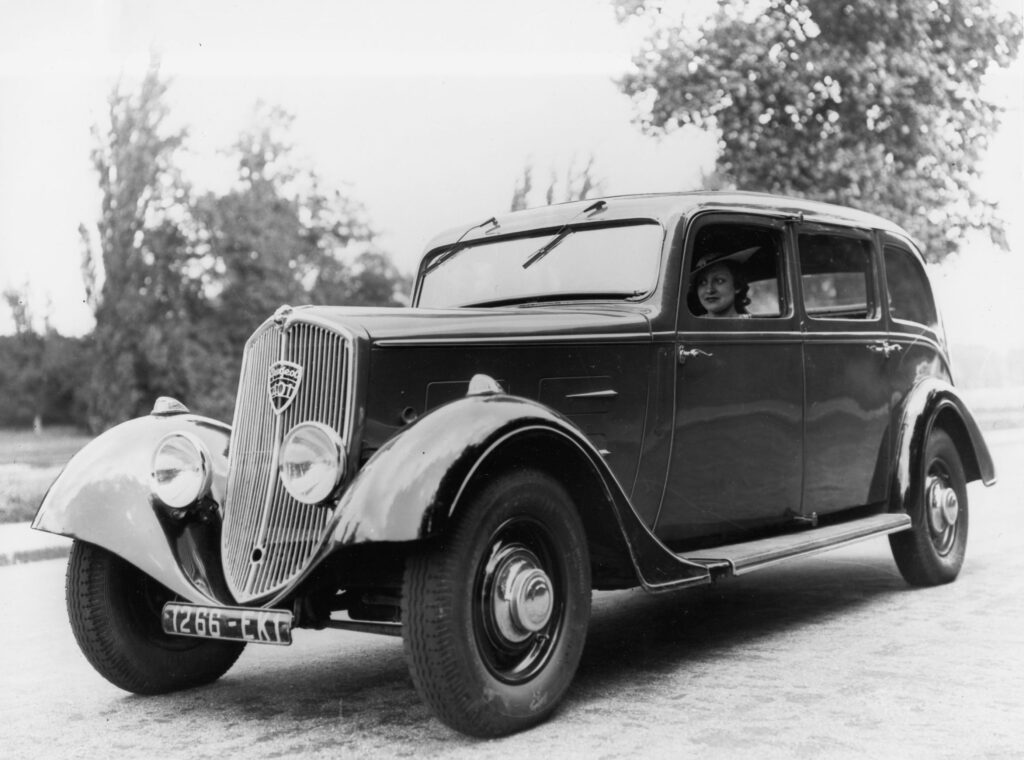
In the autumn of 1934, Peugeot proudly presented the Peugeot 401 at the Paris Motor Show. This elegant mid-size car was designed to fill the gap between the luxurious Peugeot 601 and the robust Peugeot 301. With its modern appearance, innovative technology, and impressive variety of body styles, the 401 was a striking presence on the French streetscape of the 1930s.
The years following the 1929 economic crisis called for innovation. Peugeot understood that a single model was no longer sufficient and focused on diversification. This led to the creation of the 401: a model that combined power with comfort. Under the hood was a 1,720 cc four-cylinder sidevalve engine producing 44 hp – a respectable performance for its time. Like all models in the 01 series, the 401 also featured independent front suspension, which ensured excellent roadholding.
Although most examples were produced as sedans, Peugeot offered the 401 in no fewer than eleven different body styles, including several rare coupés and convertibles. One of the most legendary versions, however, was the Peugeot 401 Eclipse – a technical masterpiece that was far ahead of its time.
The innovative 401 Eclipse
In collaboration with coachbuilder Carrosserie Pourtout and designer Georges Paulin, Peugeot introduced something revolutionary: the first car with an electrically folding metal hardtop. This system, called Eclipse, allowed the roof to disappear completely into the trunk, and it did so as early as 1935! More than twenty years before Ford introduced its Skyliner, Peugeot already had this technology.
Built on the 401D chassis, the Eclipse was notable for its sleek, low lines. Only 79 examples of this futuristic coupé-cabriolet were ever built, making it a rare and coveted classic today.
Although the Peugeot 401 impressed with its design and technology, the model had a short production run. Production stopped already in August 1935, less than a year after its introduction. At the beginning of 1936, it disappeared from the price list for good, partly because Peugeot had to make room for its successor: the Peugeot 402, a model with an all-steel body and a very progressive look.
With 13,545 units built, the Peugeot 401 wasn’t a mass-produced car, but it did leave a lasting impression. The Eclipse version, in particular, is considered an icon of French creativity and technical ingenuity. Anyone who thinks that modern convertibles with retractable roofs are a recent invention is mistaken… Peugeot was already doing it in the 1930s.